
What to Do With Too Much Basil: Easy Pesto, Freezing Tips and Fast Dinners
What to Do With Too Much Basil: Easy Pesto, Freezing Tips and Fast Dinners
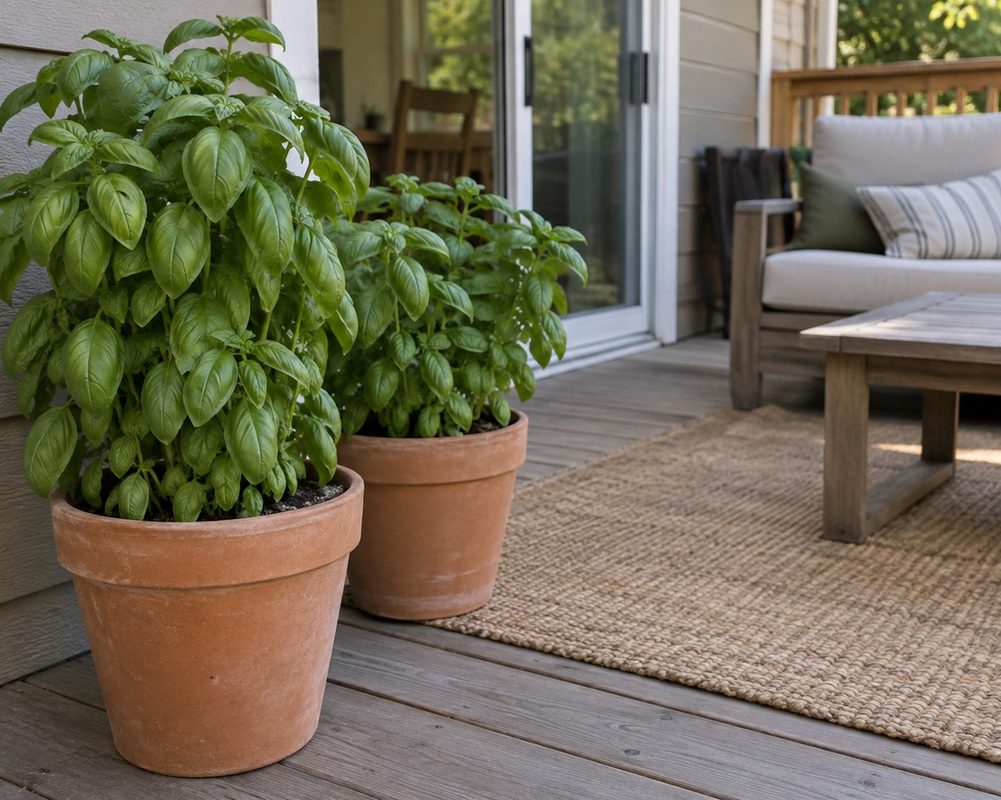
For the past two weeks, I have been carrying three pots of basil in and out of the house every day like a woman transporting extremely fragile, leafy infants.
Out in the morning. Back inside before bed.
One of them sleeps on the kitchen counter, where it gets shuffled around at least twice more because it’s blocking the kettle.
Charlie has decided the evening pot migration is a game. He follows me outside, tail going, ready to assist.
I have also started talking to the plants, “Right, in you come now”. I have become my mother. 🙄
The reason for all this nonsense is that my basil plants have gone completely feral, as they tend to do at this time of year. I now have three plants the size of small shrubs, producing leaves faster than one household can reasonably eat them.
It’s a lovely problem to have, but it’s also a fairly urgent one. Cool nights are coming, and basil has absolutely no interest in toughing it out.
Why you should harvest your basil before frost
Basil is a tender annual and an absolute princess when it comes to the cold. It can suffer chilling damage well before the temperature reaches freezing, so waiting for the first frost is not advised.
Those cool late-summer and early-fall nights can cause the leaves to discolour, wilt or develop dark patches. And one cold night can finish the whole plant.
There is also the flowering issue. Once basil begins producing flower buds, more of the plant’s energy goes towards flowers and seeds. Regularly pinching off those buds helps keep the plant bushy and producing leaves for longer.
If your basil is enormous, flowering or being carried indoors every evening by someone muttering under their breath, it’s probably time to harvest it.
How to harvest basil properly
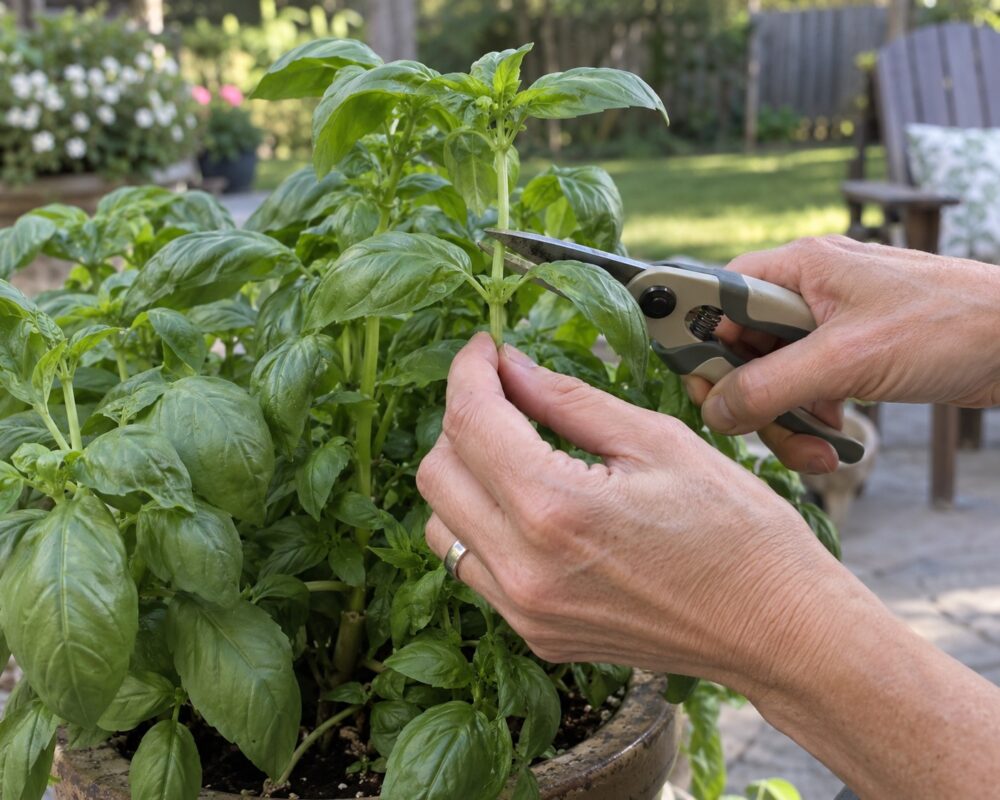
Use clean kitchen scissors or small garden shears and cut whole stems just above a pair of leaves. The plant will branch from that point, giving you two new stems instead of one.
Take the top portion of each stem and leave plenty of healthy growth below. If the weather remains warm enough, the plant may reward you with another harvest.
It’s best to cut basil in the morning, once any dew has dried and before the day becomes too hot.
A couple of things to know once you bring your basil inside:
- Treat cut basil like a bouquet. Place the stems in a vessel of water on the counter, away from direct sun. Loosely cover the leaves with a plastic bag if you want them to last a little longer. Basil is sensitive to cold and will blacken in the refrigerator.
- Root a few cuttings. Place healthy stems in a glass of water on a sunny windowsill, changing the water every few days. They should begin developing roots within a week or two. You can pot them up and attempt to keep a small basil plant indoors, along with the smug satisfaction that comes from having propagated something.
My simple basil pesto recipe
This is the pesto I make when the basil situation gets out of hand. It makes approximately 1½ cups.
Ingredients
- 2 packed cups fresh basil leaves, larger stems removed
- ⅓ cup pine nuts
- 2 garlic cloves, peeled
- ¾ cup finely grated Parmigiano Reggiano
- ½ to ⅔ cup good extra-virgin olive oil
- 1 teaspoon kosher salt
- 4 teaspoons freshly squeezed lemon juice
Method
Toast the pine nuts in a dry frying pan over medium heat for three to four minutes, shaking the pan frequently.
Do not walk away.
Pine nuts go from pale to perfect to incinerated in approximately eight seconds. I speak from experience, and at current pine nut prices you will want to cry if you ruin the batch.
Transfer the pine nuts to a plate and let them cool completely.
Add the garlic, cooled pine nuts and salt to a food processor or blender and process until you have a rough paste.
Add the basil and use short pulses until it is finely chopped. Continually running the machine creates heat, which can bruise the basil and dull its lovely green colour.
Pour in ½ cup of olive oil and pulse just until the pesto begins to come together. Add more oil as needed until it reaches the consistency you like.
Transfer the pesto to a bowl and stir in the Parmesan by hand. I find this gives it a better texture and prevents the cheese from becoming pasty.
Finally, stir in the lemon juice. It brightens the flavour and helps slow down browning.
Taste the pesto and adjust the salt. It will probably need more than you think.
Pesto substitutions that work
Use walnuts instead of pine nuts. Walnuts cost considerably less and make a delicious pesto, although the flavour is slightly more bitter. Toast them as you would pine nuts, then rub away any loose papery skins before using them.
Try a combination of Parmesan and Pecorino. Pecorino is sharper and saltier. A half-and-half mixture gives the pesto a little more bite without overwhelming the basil.
How to freeze basil and pesto
Freezing is my preferred way to preserve basil because it keeps far more of that fresh flavour than drying.
Freeze pesto in individual portions
Spoon the finished pesto into a silicone ice-cube tray, cover it and freeze until solid. Pop out the cubes and transfer them to a labelled freezer bag or airtight container.
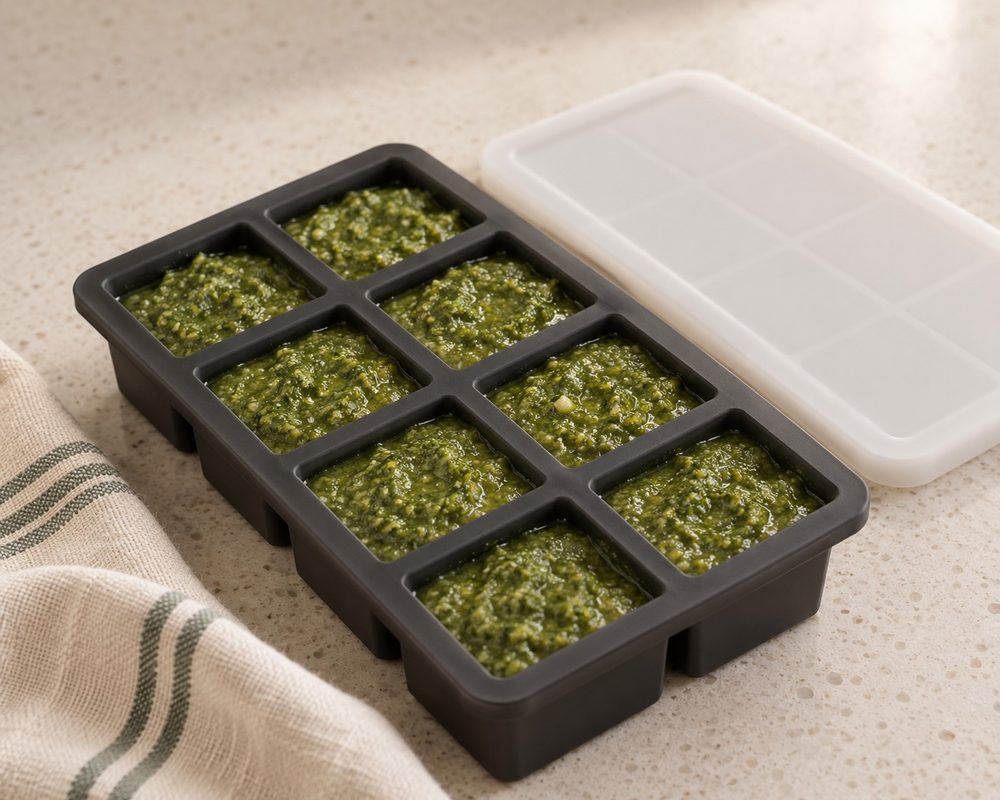
Depending on the size of your tray, one cube will usually hold around two tablespoons, which is a useful amount for a single bowl of pasta, one chicken breast or a pot of soup.
Silicone matters here. Pesto releases easily from a flexible tray. Getting it out of a rigid plastic ice-cube tray can turn into a hostile kitchen project.
Yes, you can freeze pesto with the cheese already mixed in. Some people prefer to leave it out and add freshly grated cheese after thawing, which can give the pesto a slightly fresher texture. Both methods work. I put the cheese in before freezing because the woman standing in front of the freezer next January is unlikely to feel like grating Parmesan.
Freeze whole basil leaves
You can also freeze clean, dry basil leaves in a freezer bag. Lay them flat, press out as much air as possible and freeze.
The leaves will darken and become soft when they thaw, but they are still delicious in soups, sauces and cooked dishes.
Label everything with the date. You will not remember what it is or when you made it come February.
One safety note: Garlic sitting in oil at room temperature is a botulism risk. Garlic-in-oil mixtures should be kept in the fridge at 4°C or lower, for no more than four days, or freeze for longer storage. So, that pretty little jar of pesto sitting out proudly on the counter is a hard no. Put it in the fridge and plan to use it up in a few days.
Easy ways to use pesto that aren’t pasta
Pasta with homemade pesto is delicious, and I could happily eat it every day. But there are lots of other things you can use pesto for.
Air-fryer pesto chicken. Spread pesto over chicken thighs or breasts and air-fry at 375°F/190°C. In my air fryer, thighs take approximately 18 to 20 minutes and breasts take 12 to 15 minutes, depending on their thickness. If the pesto is darkening too quickly, lower the temperature to 350°F/180°C, or you can add the pesto halfway through cooking. Cook chicken pieces to an internal temperature of 165°F/74°C, and please use a thermometer rather than optimism.
Pesto roasted potatoes. Halve baby potatoes, toss them with just enough oil to coat and roast at 400°F/200°C for approximately 30 minutes, or until golden and tender. Toss them with pesto in the hot pan as soon as they come out of the oven. Adding the pesto at the end preserves its fresh flavour and prevents the basil and cheese from burning.
My four-minute lunch/dinner. Combine a drained tin of white beans, a drained tin of good tuna, a generous tablespoon of pesto and a squeeze of lemon. Eat it warm or cold.
Stir it into soup. Add a spoonful of pesto to minestrone, tomato soup or white-bean soup after taking the pot off the heat. It adds freshness and makes a basic soup taste far more interesting.
Add it to eggs. Stir a small spoonful through scrambled eggs or tuck it inside an omelette with a little cheese.
Use it with salmon. Spread pesto over a salmon fillet and cook it in the oven or air fryer. Mine is usually done in approximately 12 minutes, although the exact time will depend on the thickness of the fillet.
Upgrade a grilled-cheese sandwich. Spread pesto on the inside of the bread before adding the cheese. Thank me later.
Turn it into salad dressing. Thin the pesto with lemon juice and a little more olive oil until it pours easily. Toss it through almost any green salad. You can also spoon it over roasted cauliflower.
And, of course, there is always pasta.
With a freezer full of pesto cubes, even the most uninspired January dinner is only a pot of boiling water away from tasting like you had a plan.
Want more easy recipes? Check out the food category on my blog.
Disclosure: This post may contain affiliate links. If you click through and make a purchase, I may receive a small commission at no cost to you. Thank you for supporting this blog!
Share this post with a friend:
Copy LinkLink copied!