What Clothes Are Worth Spending On (And Where To Save)
Where To Splurge & Where to Save
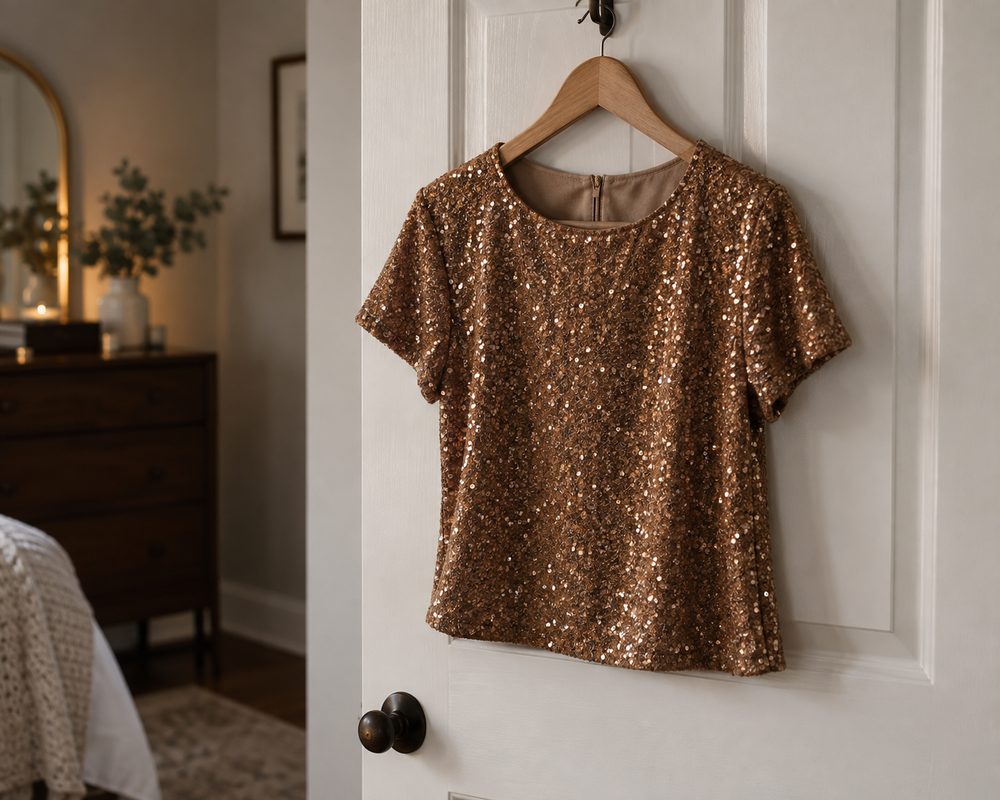
There is a sequined top in my closet I have worn exactly once. Every morning I look at it. Every morning it looks back.
It cost $90. I bought it during a brief period in which I had decided I was becoming a person who wears sequins on a semi-regular basis. Not for an event. Just, in general, as a lifestyle. I wore it to a party, couldn’t tell you which party, some holiday thing I assume. That’s the entire life of the garment. One evening I can’t remember.
Ninety dollars. One wear. $90 per wear.
I mention this because I work in fashion. Not the kind where people wear sunglasses indoors, but rather the un-glamorous eCommerce part, where I spend my days on product pages and analyzing online sales and conversion rates. I have analyzed enough product purchase and return data to know exactly which garments people buy in any given mood.
And I still bought the sequined top. Even analytical me is susceptible to a fad or trend, or (let’s call it what it was) a whim!
So, what clothes are worth spending money on, and what should you save on? I have thoughts. I also have receipts.
What Cost Per Wear Actually Means
For years I thought being good with money meant buying the cheapest version of whatever I wanted. A $60 sweater instead of the $200 one? Shoes on sale for $79? Responsible adult.
Never mind that the sweater looked defeated after six washes, or that the shoes raised a blister that nearly crippled me.
Then I discovered the concept of cost per wear. Take what something costs. Divide it by the number of times you’ll wear it.
A $400 pair of loafers worn 200 times comes out at $2 a wear. The sequined top sits at $90 a wear, and is not improving with age. Suddenly the loafers are the frugal choice and the cheap top is the most expensive thing I own, which, per wear, it is.
Cost Per Wear Is Also A Bit Of A… Lie
The number of wears is a guess. You’re the one guessing. Which means cost per wear will justify absolutely anything, provided you’re motivated enough, and you are always motivated enough while standing in the store holding the thing that you covet.
Did I run the math on the sequined top? I did. In my head, at speed, somewhere between the fitting room and the cash register. It came out fine.
“I’ll wear this regularly” is the shopping equivalent of “I’ll start Monday.”
Fantasy Tracy Does Not Get A Vote
So before I spend real money, I ask how often I’ll actually wear something. Not how often “Fantasy Tracy” would wear it.
Fantasy Tracy attends considerably more cocktail parties than I do. She has somewhere to be in a silk wrap dress on a Tuesday. She lives in a home with no stairs, no groceries and no dogs.
Actual Tracy has two Labs, a black one and a blonde one, and between them they’ve got the colour range covered, so there is nothing I own that doesn’t end up wearing one of them. There is a lint roller in every room of the house. There’s one in the car and one in my desk drawer at work. I’m sure there are others.
Keeping those two women separate has saved me a considerable amount of money. It did not save me from the sequined top unfortunately, nothing was going to save me from the sequined top.
What Clothes Are Worth Spending On
Ok, Tracy, what should we be splurging on then, and where should we save?
Glad you asked! Here are my recommendations:
Everyday Shoes And Winter Boots
Shoes you wear constantly are the easiest place to win at cost per wear. A well-made loafer, ballet flat, ankle boot or neutral sneaker that works with jeans, pants and dresses earns its keep fast. And I’d rather have one great pair of shoes that I reach for automatically, than three mediocre pairs bought because each was “only” $80. Also, at 56, I’m no longer willing to negotiate with a shoe either. If it hurts in the store it will hurt on vacation, or at the party, and it will hurt considerably more come 11pm.
Winter boots earn their cost per wear too…if you’re in a colder climate. A warm, properly waterproof pair with real grip gets worn regularly from December through March, which could easily be 100 wears a season. Spend here. The boots that start letting water in around the second week of January are the worst purchase, and no amount of clever styling fixes wet socks. Ice also does not care what your boots cost.
Denim In A Dark Wash
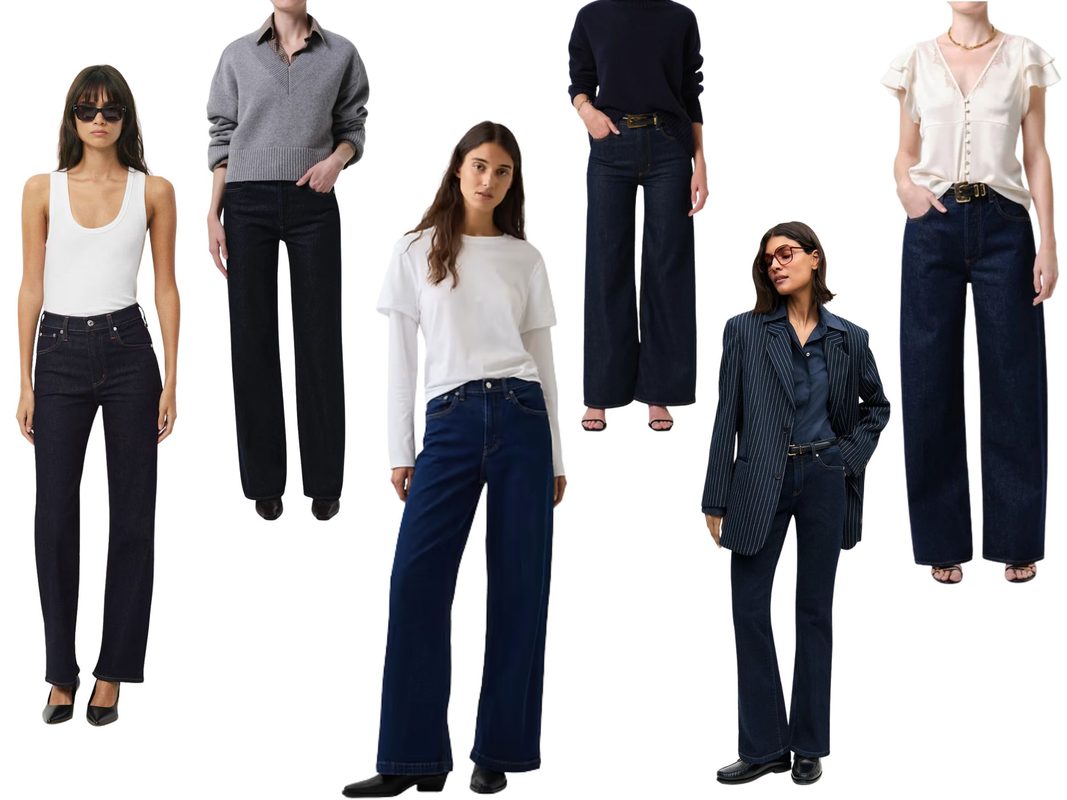
Jeans are the thing most of us put on most days, which makes them the easiest win on this list and the one people cheap out on most reliably.
Dark wash specifically. Minimal fading, no distressing, a straight leg. Dark denim goes with everything already in your closet, it reads smarter than a faded pair, and it doesn’t date you the way a wash with a lot of ‘personality’ does.
Look for enough stretch to be comfortable and not one thread more. The extra stretch is what turns a good pair of jeans into a pair that’s giving diaper-butt by three in the afternoon.
The cut is all yours. If you’ve found a shape that works on your body, that shape is in fashion, permanently, regardless of what happened on a runway in February. I would of course stay away from anything overly trendy: stick to timeless styles and they’ll last you longer.
Coats And Jackets
We wear outerwear roughly ten months a year here in Canada, occasionally cycling through all four seasons before lunch. A good wool coat, trench or parka gets worn hundreds of times, and classic shapes outlive trend cycles by a long shot.
When buying a wool coat, which I highly recommend everyone have in their wardrobe, make sure it’s at least 85% wool, and the other ~15% should be nylon. Blending a little nylon into wool tests up to 35% better for abrasion resistance than wool on its own, which is exactly why you find it in coats built to be worn hard. The coat hasn’t been cheapened, it’s been reinforced.
A coat that’s 30% acrylic is a different conversation. Acrylic is in there to bring the price down, and for no other reason. It doesn’t breathe, it pills, it goes shiny at the spots where you sit and lean, and it will not hold its shape through multiple winters.
So don’t ask how much wool is in it. Ask what the rest of it is. Buy smart and a good wool coat, in a classic colour and cut, goes with everything and is one you’ll be wearing for over a decade.
Knitwear
Wool and cashmere reward spending more… up to a point. Expensive doesn’t automatically mean good. Check the fibre content, look at how the seams and cuffs are finished, and be suspicious of anything already looking fuzzy under flattering store lighting. Loose, fluffy fibres are pre-pilled fibres.
A beautiful sweater you wear weekly for five years is a fantastic buy. A beautiful sweater that requires regular attention and pampering is less compelling.
If you want the detail, I’ve written a full guide on how to buy cashmere without overpaying.
It doesn’t have to be cashmere, either. Merino wool, alpaca, lambswool, or a wool/cotton blend all age better than the acrylic that’s been quietly creeping into knitwear, at every price point. Read the label. If it opens with a synthetic, put it back.
Where I’d look:
Uniqlo. The extra fine merino is 100% wool and runs XXS to XXL. Not the most interesting sweater you will ever own, but certainly one of the most reliable.
Quince. A highly regarded value pick, and they are very transparent about their fibres (Mongolian grade A cashmere, 15.8-16.2 microns, 34-36mm length). Lots of styles to choose from, excellent customer service, and a generous return policy. You can’t go wrong. I would highly recommend getting a cashmere comb to keep it looking fresh.
COS. Wool and wool blends in better, more modern shapes than the price suggests. Check the label as you go, some pieces are blended further than you’d want.
Naadam. They buy their cashmere wool direct from Mongolian herders, which helps to keep the cost down. They have a range of products of varying quality and price point; something for everyone. Their entry level cashmere is a good value.
The Bag You Actually Carry
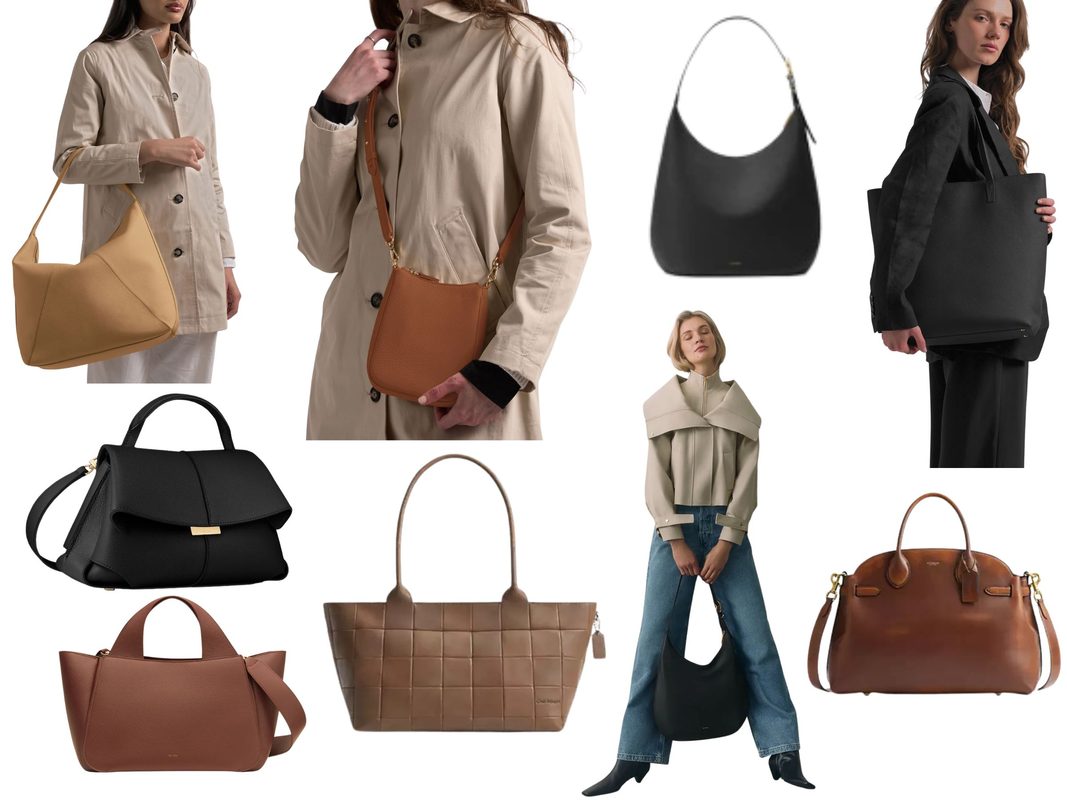
Actually carry being the operative words. If you’re a tote-every-day person, spend on the tote. If you reach for a crossbody 90% of the time, don’t sink real money into a top-handle bag that permanently assigns one of your hands to handbag duty.
When you’re evaluating one, look at the hardware. It’s the fastest tell there is. Cheap hardware is perfectly convincing in the shop and then goes dull and faintly plasticky in a few months, while the leather it’s bolted to is still absolutely fine. Zips, clasps, feet, the little ring the strap hangs from. That’s where the money went… or where it didn’t.
If leather, read the grade on the label; they might not mean what you think. Full grain is the top layer of the hide with the grain left intact, scars and all, and it’s the best thing you can buy. Genuine leather comes from the lower splits of the hide, coated in polymer and embossed to resemble the good stuff. Technically it is real leather, but at the bottom of the real leather range. Bonded leather is scraps ground up and glued back together. It is barely leather any more and I would avoid.
Which raises the obvious question of whether it needs to be leather at all. It doesn’t.
The one to avoid is PU, sold to you as vegan leather. It’s a polymer coating on a fabric backing, and it doesn’t wear, it delaminates. The surface lifts off in sheets and nothing brings it back. You’ll be lucky if you get 2 years out of it.
If you need a light and/or vegan option, waxed canvas or nylon are light, cheaper and typically durable options, and ask nothing of you beyond the occasional wipe.
So. Leather if you want the bag that outlasts you. Waxed canvas or nylon if you’d rather carry less weight, spend less money, or keep animals out of it altogether.
What Goes Underneath
The least glamorous spend on this list and probably the highest return. The right bra changes how every top, dress and jacket sits. Good seamless underwear remove the lumps and lines we often blame on the clothes. Shapewear, if you want it, should smooth gently rather than slowly relocating your internal organs.
None of it is fun to buy, nor cheap, but all of it improves clothes you already own.
Here’s a short list of some brands to consider, ones who make a quality product. Note: I only included brands whose sizing was reasonably inclusive, which quietly excludes several names you might otherwise expect to see. A brand that stops at a DD is not size inclusive.
CUUP. Comfortable, classic silhouettes. They engineer for larger sizes rather than just scaling up, without compromising on looks (goes up to 50 band).
Knix. Canadian, woman-owned. Select styles run 28A to 44H. Wireless, comfortable, the sort of thing you forget you have on.
Elomi. British, goes up to an R cup, and designs for a fuller bust rather than grading a B upwards until it is ‘technically’ large. Sold in North America through independent lingerie shops rather than direct.
The thing that will help more than any brand named above: go and get fitted in person, at an independent shop. Not a department store counter. A shop where somebody measures you, evaluates your breast shape, and listens to your preferences. Just because a bra is your size does not mean it will look good. Different bra designs suit some shapes better than others.
Tailoring
This is technically not clothing, but often a better return than buying anything new. Sometimes the problem was never the clothes. It’s the extra inch of fabric puddling around your ankles.
Finding someone good is the actual work, and most of us never get around to it. Ask at a local boutique who they send their customers to. Dry cleaners often offer tailoring services, and they are usually satisfactory, but the ones who do this properly tend to do only this.
Then test them on something you’d survive losing. A pair of pants you like but wouldn’t grieve. You’ll know from the hem whether to hand over the costly wool coat.
When you find the right one, hold tight. A tailor who has done six things for you already knows you like a sleeve shorter than most people ask for, and that you’d rather a hem sit on the shoe rather than break over it. You stop having to explain yourself every time, which is worth considerably more than it sounds.
Worth altering: hems, sleeve length, taking in a waist, moving a button two inches.
Usually not worth it: shoulders, which are genuinely difficult and priced like it, and anything else where the cost of the alteration is approaching what you paid for the garment in the first place.
Where To Save On Clothes
Very Obvious Trends
I love a trend. I’d just rather not finance one.
If the defining feature of an item is the thing that makes it aggressively “Fall 2026”, I’m cautious. Try the colour, try the silhouette, have some fun. Just don’t buy the $600 version unless you’d still love it after Instagram has moved on. Usually you can do the trend with what’s already in your closet, which costs nothing, just an hour of your time taking inventory of your closet.
This season (Fall ‘26) that means fringe, which is on many jackets and bags and looks fantastic, for exactly one season. Coloured denim, mostly in the ‘earthy’ family. Bandana scarves, which are the cheapest method I know of making a coat you’ve owned for four years look refreshed. And bombers and cropped trenches, which are having a moment and which nobody needs to pay designer money to participate in.
All of that is fun. None of it needs to cost much. Costing very little is the entire point of it.
Occasion Clothes
Cost per wear is the worst in this category.
We decide an event is important, and often emotional, so it follows that it requires an ‘important’ dress. The dress then appears in photographs, which somehow convinces us it can never be worn again. So into the closet it goes, in it’s dry cleaning plastic, like an archaeological specimen.
For weddings and holiday parties I’ll happily buy cheap, rent, shop resale, borrow, or wear something I already own. That last one is free, and truly, nobody remembers.
Basic Layering Pieces
A white T-shirt does not need a pedigree. Neither does a plain tank.
Don’t get me wrong, I care about fabric, opacity, fit and whether it survives the wash. Past a certain price though, and I stop being able to see what I’m paying for. Save here and put the difference toward the blazer you’ll wear over it for six years.
Where I’d look, roughly in the order I’d try them:
Uniqlo. You cannot beat the quality for the price. There are physical stores too, so you can try things on, which matters more with a plain T-shirt than you think.
COS. Heavier cotton, better cut. Not cheap, but will last you several years if you take care of it.
Kotn. A Canadian brand, sustainable, ethically made in Egypt, Portugal and Turkey, working in long-staple Egyptian cotton. Known for “better basics”. They have a bit of a cult following.
Aritzia. A Canadian brand. The tees are genuinely good, and they have several different styles and a decent size range.
The Expensive Mistake Nobody Warns You About
You can get cost per wear wrong in the other direction, and I’m the worst offender I know.
I have several drawers of cashmere. Sweaters, cardigans, wraps, and too many scarves to count. I wear maybe a third of it with any regularity, because the rest feels too nice for a Tuesday. Too nice for the office. Too nice to risk anywhere near food. So it sits in a drawer, being lovely to nobody.
That’s a worse outcome than buying badly. At least the sequined top got a night out. Expensive things aren’t for special occasions, they’re for today.
Wear the damn cashmere. If you’re frightened of ruining it, that’s a solvable problem, and I’ve written down exactly how I care for mine.
Three Questions To Ask Before You Buy
- Will I wear this at least 30 times?
- Does it work with several things I already own? Can I style it at least 3 different ways?
- Would I still want it if it weren’t currently everywhere?
“Investment piece” is a wonderfully convenient phrase for convincing yourself that spending $700 is a form of financial planning. Sometimes it’s a brilliant purchase. Sometimes it’s just a very expensive cardigan.
As for the sequined top? It’s still hanging in my closet, still sitting at $90 a wear, and it will stay there until I actually put the thing on. Which feels like a great deal to ask of a Tuesday.
Disclosure: This post may contain affiliate links. If you click through and make a purchase, I may receive a small commission at no cost to you. Thank you for supporting this blog!
Share this post with a friend:
Copy LinkLink copied!