
How to Book Cheap Flights: The 6 Real-Life Tricks I Actually Use
Updated on August 25, 2026
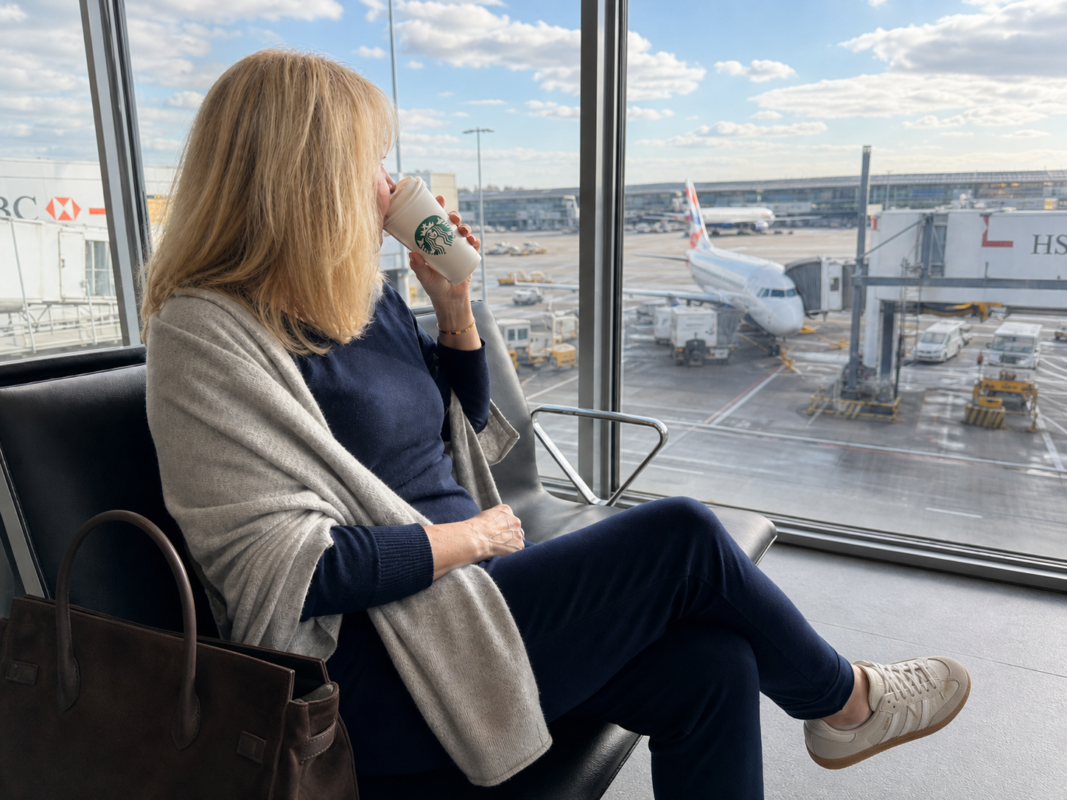
Here’s what we’re covering today: how to book flights for the best price, when to book them, which popular “hacks” are nonsense, and one slightly sneaky trick that got my husband a lie-flat business class seat for half the price. Buckle up! (sorry, it was right there, I couldn’t help myself😆).
First, my credentials, because the internet is full of travel advice from people who fly twice a year. I used to travel a lot for business, sometimes two or three trips per week. I’ve always booked all my own travel, plus I typically book my husband’s flights, and now that my son is at school in the UK, there’s a steady stream of flights back and forth across the Atlantic. A glamourous little portfolio, right up there with renewing the dog license.
I’m not a travel agent (although I do have a close friend who is one, and has taught me a thing or two), I’m just a seasoned, booking-savvy traveller who is also a bit of a control freak (I like things a certain way, and I wasn’t going to make my admin assistant memorize every loyalty program and credit card offer I had going).
The main thing my years of booking have taught me is this: a flight is a commodity. Prices can swing hard and fast, sometimes by hundreds of dollars in a day. The airlines are counting on you not noticing. Personally, I’d rather spend my money on the actual trip than hand it to an airline, so I put in a bit more effort than the average person. Here’s where that effort actually pays off.
Know when airlines start caring about your flight
I like being organized. I enjoy a plan. I own more packing cubes than one person needs. But booking flights 6 months ahead does not automatically mean you’re getting the best deal.
Airlines don’t actively manage flights from the day they’re published. They start actively managing inventory and prices around 90 days out for international flights, and around 60 days out for domestic. That’s when you’ll see prices start to move regularly, and sometimes significantly. This is when you need to start paying attention.
If you’re planning further ahead than that, use that time to set a baseline. Search your route, note the price, and do not panic-buy because you saw the words “only 3 seats left”. Booking 6 months or more out almost never gets you the best deal.
Expedia’s 2026 Air Hacks Report backs this up with Canadian booking data: the cheapest window for domestic economy flights is 31 to 45 days before departure, saving an average of $185 CAD compared to booking 6+ months out. For international economy, the sweet spot is 30 days out, about $190 CAD in savings. If booking international travel less than 4 weeks out makes you sweat, 45 days still saves you nearly as much in my experience.
The takeaway: know your baseline early, but expect the real deals to show-up once the airline is actively managing the flight inventory.
The best time to book a flight (and what the data actually says)
I’ll tell you my ritual, and then I’ll tell you what the data says, and you can decide for yourself.
I book late at night, usually after 11:00pm, or very early in the morning if I’m up at like 5:00am (which isn’t often). And I book on a Tuesday, Wednesday, or Saturday night. Time and time again, my absolute best luck has been around midnight on a Saturday night. I can’t fully explain it, but I’ve done it too many times with too much success for it to be just a coincidence.
Now, what the data says. Google Flights’ own numbers show the day of the week you book barely matters, with only about a 1% difference between the cheapest and most expensive booking days. Expedia’s data gives Monday or Friday a slight edge as the cheapest days to book, by around 3%. So, my Saturday-at-midnight habit is somewhere between a strategy and an urban myth. I must say though, I have seen many a travel influencer mention the Saturday night booking trick. Besides, there’s something satisfying about hunting for deals in your pajamas.
9 times out of 10 what will make a difference is when you fly; the actual day of the week. Being flexible can absolutely pay off. Flying on a Tuesday or Wednesday instead of a Saturday can easily save you 10%. Here’s a very recent example (which actually prompted me to write this blog post!). Last week I booked my son’s flight back to the UK in September. When booking his return date in December, the difference between him flying home on the Saturday vs. the Monday was $300 (same route, same departure time). I’ll take that, thank you very much.
The incognito mode myth (I tested it, so you don’t have to)
There is a mountain of content out there claiming that booking sites track your searches and jack-up prices when they sense you’re interested, so you should clear your cookies, search in incognito mode, and use a VPN to look like you’re browsing from Latvia.
I’ve tested this myself, repeatedly, over years of booking. Same flight, same time, incognito window beside a regular window, with VPN and without VPN, on my computer vs. the same brand’s app on my iPhone, my computer vs. my husband’s, logged into my account vs. not logged in…. and I’m sure 20 other variations. I have not once found a meaningful price difference.
The research agrees with me. Computer scientists at Northeastern University ran a large study of price discrimination on major travel booking sites and found no evidence that airlines inflate fares based on your search history. When a fare jumps between your morning search and your evening search, it’s almost always because a cheap fare class sold out, not because the airline saw you coming.
Skip paid seat selection (with one big warning)
When I’m travelling solo, I rarely pay for seat selection. Here’s my system instead: the moment check-in opens 24 hours before the flight, I check-in and grab the best available seat at no additional charge. Then, if I’m not thrilled with my pick, I’ll check back a few times before departure to see if a better seat has opened up. People change seats, change flights, and get upgraded right up until boarding; and their seats go back into the pool.
Now the warning. Some airlines have ultra-basic fares designed to punish you for not paying. WestJet’s UltraBasic fare pre-assigns you a seat at check-in, usually at the back of the plane and a middle seat, and you’ll pay a fee if you want to change it. United’s Basic Economy does the same thing: your seat is automatically assigned and you can’t change it unless you’ve paid up front. So before you skip seat selection, make sure you understand the fare rules. On a standard economy ticket, I’m usually comfortable taking my chances. On the cheapest possible fare, where the airline has removed every comfort except oxygen, I’m way more careful.
One more thing, because I’m particular about where I sit; before I book any seat, I check it on AeroLOPA. The airline’s seat map may not tell you that 34C is beside the lavatory, doesn’t recline, and has no power outlet. AeroLOPA will! It has saved me from some truly miserable long-haul mistakes.
Bonus tip: if you’re travelling with someone and neither of you wants the middle seat, book two aisle seats across from each other. My husband and I do this all the time. We’re close enough to pass snacks and exchange looks about boarding behaviour, but we both get the seat we want. Romance is alive and well in row 20!
The partner airline trick (if you’re feeling savvy, and have some time)
This one is a little more advanced, but it can be well worth the effort.
Airlines often sell seats on each other’s flights through codeshare or partner agreements. That means the same physical flight may be available through more than one airline, sometimes at very different prices. And in some cases, their cabin categories don’t quite line-up. That mismatch is your opportunity.
Real example. My husband recently flew from Toronto to Istanbul on Turkish Airlines. Booking business class directly through Turkish was around $6,000 CAD. After some digging, he found a much better fare through a partner airline selling seats on that same flight. Because of how that particular fare and cabin were handled, he ended up in Turkish business class for half the price of the direct business fare.
Finding these takes some digging. You need to figure out which airlines partner with who, then compare what each one charges for the same flight and how their cabin classes map to each other. This is exactly the kind of tedious research AI is perfect for. Ask the AI to list all the partner airlines for your route and identify any cabin-class mismatches worth checking. Twenty minutes of AI homework and airline website validation, versus $3,000 in savings is a hell of a trade.
Track your flight like you mean it
I’ve used various flight price trackers, and I’ve been hugely disappointed. By the time the alert lands in my inbox, the fare is stale or flat-out gone. So, I track prices myself. When I’m seriously shopping a flight, I search it 2-3 times a week and watch the pattern. Is the price stable? Is it creeping up? Did it drop for one weird Tuesday and then bounce back like it had somewhere to be?
These days, I’ve upgraded my system: I have AI do the tracking for me. I set-up a scheduled AI task that searches my exact flight parameters at the same time every day (usually around 4:00am) and emails me a summary. Same route, same dates, every 24 hours, delivered to my inbox with my coffee. It’s a far better price tracker than any app I’ve tried, because it’s checking exactly what I want, when I want.
You can also use AI to compare nearby airports, flexible dates or routes, baggage rules, partner airlines, and fare classes. Just remember to verify anything important before booking.
This does take a little effort with AI, and knowing how to write a decent prompt to get the right results. If you’re new to that, start with my beginner’s guide on how to write AI prompts that actually work, and grab my free AI Prompts to Elevate Your Everyday guide, which is full of ready-to-use prompts you can copy and adapt.
The TLDR version
- Set your price baseline early, but expect the action to start <90 days out for international, and <60 for domestic.
- Book roughly 3-6 weeks ahead depending on the route. Don’t leave it too late as flight prices can sky-rocket once you are 7-10 days out.
- Be flexible on the day you fly, because that matters more than the day you book (though I’ll still be at my laptop at midnight on Saturday, thanks).
- Ignore the incognito window/VPN hype.
- Check-in the moment the window opens, and vet your seat on SeatGuru.
- And if you’re eyeing a fancy cabin, check the partner airlines before you pay full price.
The airlines have entire departments dedicated to getting the most money out of you. It only seems fair that you have a system too!
Booking a trip and unsure if you need travel insurance? Read this first: Travel insurance: what to look for and what actually matters.
Booked a trip and want to ensure a frictionless experience? Read this: Smart travel tech for a smoother take-off.
Share this post with a friend:
Copy LinkLink copied!