
How to Write AI Prompts That Actually Work: Beginner’s Guide
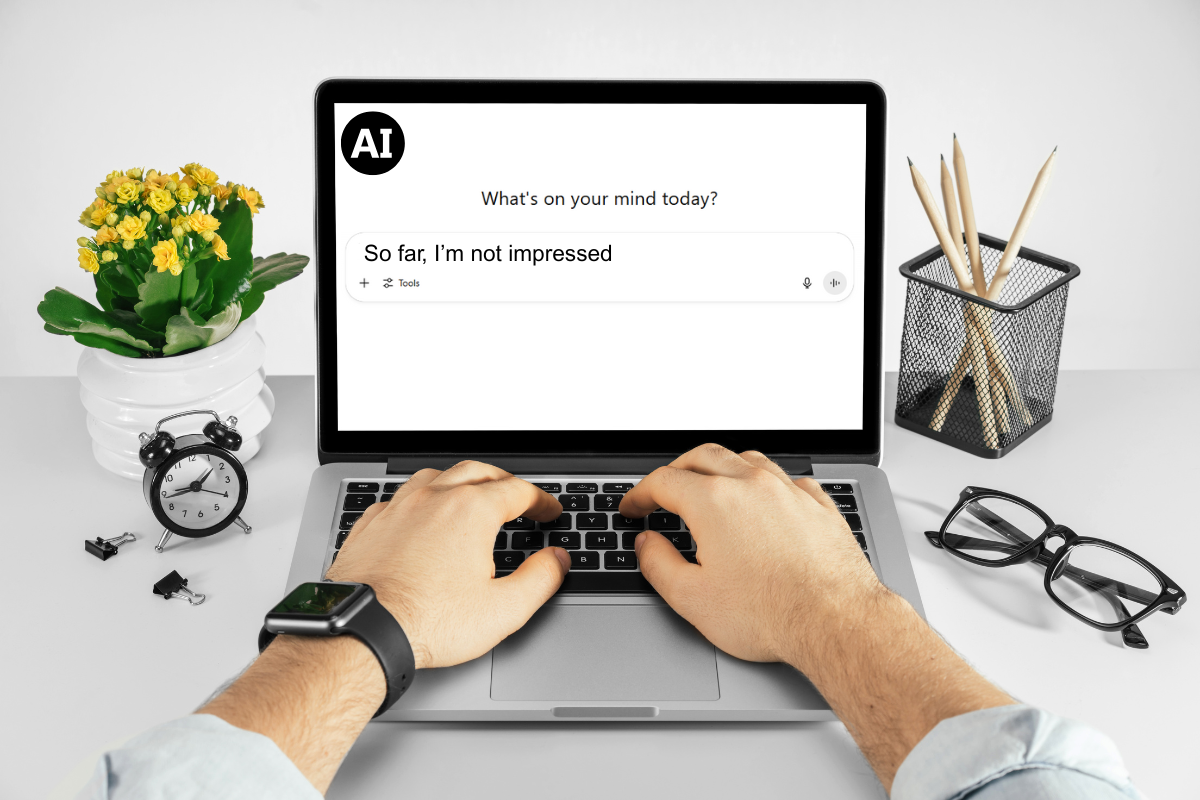
I remember the first time I tried using AI. I typed in a question, hit enter, and waited for the magic. What I got back was… not magic. It read like someone pulled the first three sentences off a Wikipedia page and called it a day. And it certainly wasn’t better than ‘good old’ Google.
Honestly? I didn’t get the hype… but I really really wanted to! Everyone kept saying how AI could help you write smarter, think faster, live better. Meanwhile, I was sitting there thinking, “This is it?”
It wasn’t until I started watching how other people were using it, and the results they were getting, that I started to clue in. The tool works. The trick is knowing how to talk to it aka, “prompting”.
If your instructions are vague or flat, it’ll give you vague and flat answers. But if you give it just a little more detail, context or direction, the results are actually kind of impressive. So if you’ve tried ChatGPT, Gemini, or Copilot and thought the results were boring, weird, or just useless, you’re not alone. Let’s fix that.
What Is a Prompt?
Think of it like talking to someone very smart, very fast, and very literal. If you don’t know how to write AI prompts that include context and tone, you’ll end up with vague and generic results. If you ask it a broad question like:
“What are some good side dishes?”
It might throw out “rice” and “salad” and send you on your way.
But try this:
“You’re a home cook who loves bold flavours and no-fuss meals. Suggest five side dishes that pair well with grilled salmon. I want options that are quick to make and use common or in-season ingredients. No mayo and no oven.”
Now it sounds like you’re getting help from someone who’s been in your kitchen and knows your pantry.
Bad Prompt vs. Good Prompt: Real-Life Examples
Let’s break-down a few everyday scenarios and see how better prompts lead to better results.
The Bad Prompt:
“Tell me the best travel tips.”
The Output: Basic stuff like “pack light” and “drink water”, advice you could find on a laminated pamphlet in a dentist’s waiting room.
The Better Prompt:
“We’re a couple in our 40s planning a road trip through France. Share practical travel tips for exploring countryside towns by car. We want to avoid tourist traps and stay flexible with our schedule. We’re not luxury travellers, but we’re not backpackers either. We like good, but affordable food.”
The Output (just some of the examples, the AI actually gave me a 3 page summary!):
- Book accommodations with free parking, especially in older towns where street parking is typically limited
- Eat at local cafés just off the main squares for better prices and more authentic food
- Consider getting an eSIM for easy and affordable mobile data upon arrival
- Learn a few key French phrases to help in smaller towns where English isn’t common
- Keep a small cooler in the car for picnic lunches so you can stop wherever the scenery looks good
- Gas stations on highways are more expensive. Fill up in towns whenever possible.
What Makes a Prompt Work?
You don’t need to be a tech genius. You just need to be a little more specific.
1. Give It a Role or a Persona
Start by telling the AI who it’s pretending to be. The more personality and context you give it, the better the results.
- “You’re a seasoned financial advisor who explains things in plain language.”
- “You’re a travel planner with 20 yrs experience who knows Europe inside and out.”
- “Act like a professional organizer who helps busy families simplify their routines.”
2. Add Some Background or Context
Don’t be afraid to give a little colour. It helps the AI tailor its response. The more real-life info you give, the more real-life help you get back.
Instead of:
“Give me some dinner ideas.”
Try:
“I need dinner ideas for tonight. I have two teenage boys who are always starving, I don’t want to go to the store, and I’d prefer something I can throw together in under 30 minutes. I have 2 lbs of chicken thighs to use up. We’re not picky, but no mushrooms.”
Or:
“I’m researching the best travel credit cards in Canada. I want one with good insurance coverage and perks that are actually useful for someone who takes a few international trips per year.”
3. Be Specific About the Output
Tell AI exactly what kind of response you want. You wouldn’t walk into a coffee shop and say “give me a drink.” The same applies here.
- “List the top ten ideas in bullet points”
- “Summarize the pros and cons, using simple language/terms”
- “Organize the information into a table”
- “Summarize for me in less than 200 words”
4. Let AI Ask You the Questions
If you’re still not sure what to ask, here’s a little trick: ask the AI to ask you the right questions. Seriously. You don’t have to figure it all out before you type. One of the best ways to use AI, especially when you’re just getting started, is to tell it what you’re trying to figure-out and let it do the heavy lifting. Once you’ve got the ball rolling, iterate and refine. The best results often come from a back-and-forth conversation with the AI.
Here’s an example:
Prompt:
“I need to buy a new car, but I don’t know a lot about cars and I’m overwhelmed by the options. I’d like you to help guide my decision. Start by asking me a series of questions to better understand my needs, lifestyle, and budget. The goal is for you to give me 3 personalized suggestions based on my answers, and tell me why you chose them for me.”
What you’ll get back:
“Great! Let’s start with a few questions to narrow things down:
- What is your ideal budget range, and are you open to buying new or used?
- Are you open to an electric or hybrid vehicle, or do you want gas?
- Will this car mostly be used for commuting, weekend travel, errands, or a mix?
- Do you prefer a car, SUV, crossover, or something else?
- How important are things like fuel efficiency, safety ratings, or tech features?
- Do you live in an area with harsh winters or rough roads that would make all-wheel drive or higher clearance important?
- How many passengers do you typically need to accommodate?
- Are there any specific brands or features you know you want—or want to avoid?”
Now the pressure’s off. You don’t have to remember what questions to ask or spend an hour Googling “best compact SUV under $40K.” The AI will review and distill all of the information out there, and present it in a nice, cohesive summary. It might even raise a question that you’ve never considered, but should.
You can use this same approach for tons of things:
- Planning a trip to a place you’ve never been
- Choosing a new laptop
- Starting a garden
- Designing a skincare regimen
Just start with a goal and let the AI ask you what it needs to help you get there.
Common Prompting Mistakes
Most people fall into these traps when they first start using AI. Here’s what to avoid:
Vague Questions
“Tell me about insurance.”
That’s like asking someone to explain all of math in one paragraph.
Try:
“Explain the difference between actual cash value and replacement cost in home insurance. Use a simple example like if my garage was destroyed in a fire.”
Lacking Context or Clarity
AI doesn’t know where you live, what you’re doing, or why you’re asking; you need to tell it.
“I need three vegetarian dinner ideas that will impress my boyfriend’s parents. We’re in Canada and it’s winter, so something warm and hearty. I have a decent spice cupboard, and a good selection of canned beans, rice, and lentils. Someone has a coconut allergy. The recipe should take no longer than 15 minutes to prep, and 30 mins to cook.”
Skipping Personality
AI takes its cues from you. If your prompt is bland, the reply will be too.
“You are the favourite economics teacher at the local college, revered for your wit and ability to distill complex concepts. Write a concise but approachable explanation of how compound interest works, as if you’re teaching someone who hasn’t looked at a math equation since high school.”
Prompt Glow-Ups That Work
💡 Learning Prompt
Before:
“What is perimenopause?”
After:
“You’re a women’s health expert. Explain perimenopause to someone who is just starting to experience symptoms like disrupted sleep and mood swings. Keep it simple and supportive. Provide some suggested follow-up reading, and the top-rated, research-backed ways to combat common symptoms, without taking hormones.”
✅ Planning Prompt
Before:
“Help me plan a backyard party”
After:
“You’re an experienced party planner. My spouse and I (in our 50’s) want to host a chic but casual backyard BBQ for 15-20 friends this summer. Our budget is around $800. We have a pool, a sitting/lounge area, and a large table and chairs in our backyard. Give me a step-by-step planning checklist, including 5 theme suggestions, a simple menu with a vegan option, recommendations for decor and music, and a categorized shopping list.”
🔍 Research Prompt
Before:
“What are the best supplements for me to take.”
After:
“I’m a 45 year old man dealing with low energy and muscle soreness. I generally have an active lifestyle. What are the most researched, safest supplements that can help with recovery and fatigue? Include any potential side effects I should know, and the recommended dosing. I am 5’10” and 170lbs.”
AI Instead of Google?
We’re already seeing AI usurp King Google, and honestly the crown’s starting to look better on AI. Sure, Google’s trying to keep up by introducing “AI Overviews,” but it’s not the same as having a full-on conversation with an AI tool. When you use a well-written prompt, you get answers that are actually tailored to you, not just a stack of links. So, the next time you’re about to Google something, like “RESP withdrawals” or “how to take better photos”, try asking AI instead.
But don’t stop at “RESP withdrawals.”
Try:
“I started an RESP when my child was 8, they are now 17. The account has $60K in it. Explain how RESP withdrawals work in Canada when your child starts university. What are the tax implications, and what else should I keep in mind as the parent?”
Make it specific. Add some colour. Pretend you’re talking to a friend who’s smart, helpful, and just needs a little direction. And don’t be afraid to tell the AI that it’s results weren’t good (and why), and to try again.
Then come back and tell me how it went. Did it help?
For reference, here’s a list of the most mainstream AI tools:
- ChatGPT: chatgpt.com
- Gemini: gemini.google.com
- Copilot: copilot.microsoft.com
Drop a comment below. I want to hear your wins, your fails, and everything in between!
Interested in more ‘AI for beginners’ type content? Check out my previous article “AI for the Rest of Us: How to Use Artificial Intelligence in Everyday Life“. Or view my “AI for Beginners” lessons; click here.
Share this post with a friend:
Copy LinkLink copied!