
Linen: How to Buy, Where to Shop, and How to Care For It
Updated on August 25, 2026
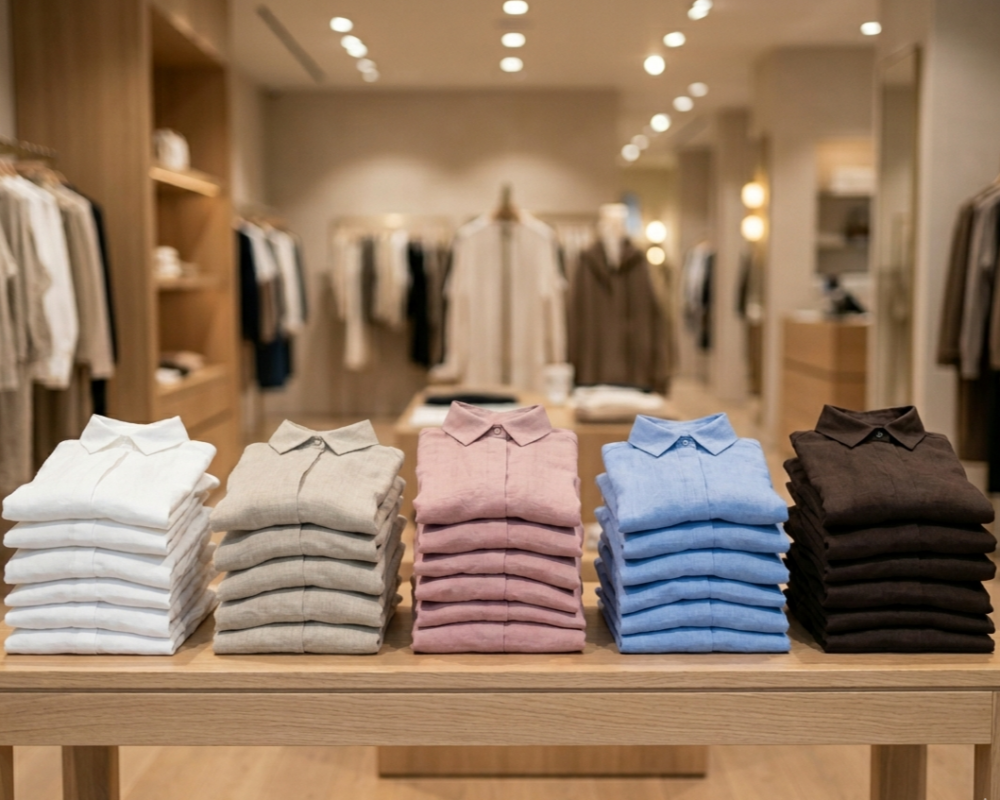
Linen season is around the corner, and I couldn’t be more excited! Linen is one of those fabrics that makes you feel like you are the kind of person who summers elegantly. You picture yourself looking breezy and smelling expensive, wandering around in a crisp, white linen shirt with a glass of something cold in your hand. What actually happens is you sit down for six minutes, and stand back up looking like a crumpled paper bag.
Still, linen is one of the best warm-weather fabrics you can own. It is breathable, absorbent, quick to dry, and famously durable. It also gets softer with wear and washing, which is why a good linen piece can earn its place in your closet for years to come.
What linen is, and why people love it
Linen is made from the fibres of the flax plant. It is breathable, helps with moisture transfer, dries faster than many other fabrics, and is one of the rare fibres that actually gets stronger when wet. That is part of why linen clothing can last such a long time when it is cared for properly.
It also softens beautifully over time. If a new linen shirt feels a little crisp at first, that is normal. It usually relaxes after a few washes and starts feeling much more lived-in and comfortable. That is the magic of linen: a bit stiff in the beginning, increasingly lovely later. Much like some people before their morning coffee!
And those little uneven bumps you sometimes see in the weave? Those are called slubs. They are normal. They are part of linen’s natural texture, and provide it it’s character. Linen is supposed to look a little imperfect. That is half the charm.
A quick word on linen blends
A cotton-linen blend can be a perfectly decent option. It usually wrinkles less and can feel a bit softer right away, which some people prefer. It is also typically a little denser, and can avoid being too sheer (ie. see-through!).
A polyester-linen blend is where I lose interest. Yes, it may wrinkle less. It also tends to feel less airy, less breathable, and less like actual linen, which rather defeats the point if the whole reason you are buying linen is to stay cool and comfortable. Check the fibre content before you fall in love with the colour. Betrayal often begins at the label.
How to tell if linen is worth buying
If you are going to spend money on linen, it helps to know what separates a good piece from one that merely looks the part. Fabric content matters, of course, but so do texture, opacity, construction, and how the garment is actually made.
1. Check the label first
If you want the real linen experience, look for 100% linen or a high linen percentage. If you are specifically trying to stay cool in hot weather, skip the polyester blends.
2. Do the crumple test
Squeeze a handful of the fabric and let it go. Real linen wrinkles. Enthusiastically. If it springs back looking suspiciously smooth, something else is doing the work.
3. Look for texture
Good linen usually has a faintly textured, slightly irregular feel. Too smooth, too slick, too perfect-looking can be a warning sign that you are not getting the linen you think you are.
4. Check the opacity
This one matters, especially in the light of day. Hold pale colours, especially white, cream, or beige, up to the light with your hand behind it. Linen trousers, skirts, and shirts can be wonderfully chic, until you realize they are effectively tissue paper.
5. Look at the construction
Check the seams, buttons, hems, and whether the garment pulls oddly at pockets or stress points. Great fabric in a badly made garment is still a badly made garment. Heartbreaking, but true.
6. Pay attention to sourcing claims
If a brand mentions European Flax or talks specifically about flax grown in Western Europe, that is a good sign. France, Belgium, and the Netherlands are major flax-producing countries, and Western Europe is the leading global producer of flax fibre. Brands that use higher-quality European flax usually tell you, because they know it is worth bragging about.
7. Price is a clue, not a guarantee
Linen is more labour-intensive to produce than many other fabrics. That does not mean expensive always equals good; fashion retail has no shortage of nonsense marketing. It does mean that extremely cheap “100% linen” deserves a raised eyebrow and a closer look.
Where to shop for linen clothing
The most accessible entry point on this list. UNIQLO’s Premium Linen line is 100% European flax and sits around $40-$90 CAD per piece. If you want to try linen without a significant financial commitment, or just need a few solid basics to start, this is where I’d send you. Available in Canadian stores and at uniqlo.com/ca.
Quince operates on one principle: remove the markup and charge less for the same quality. Their linen is 100% European and priced well below what you would pay for comparable pieces elsewhere. They ship to Canada with duties included and a 365-day return window (which no one really needs, but it is nice to know is there, and says something about their commitment to quality and customer service). I have ordered from them, and I was not disappointed; the quality holds up.
J.Crew sources some of their linen from Baird McNutt, a well-regarded Irish mill, and it shows in the drape and the way the pieces age. I feel like in the past 10 years J.Crew’s quality has become inconsistent, however their linen continues to be solid. Price range is roughly $80-$150 CAD, which is fair for what you get. The Canadian site at jcrew.com/ca ships directly.
This one gets its own paragraph. Athleta’s Linen line is excellent on its own merits, but what makes them genuinely stand out is their sizing. They run from petite through plus, and the petite sizing is actual petite proportions, not just a regular garment with a shorter inseam.
I own a pair of their linen barrel pants and a skirt, and did not need to have them shortened. If you have spent most of your adult life hemming things, or just quietly accepting that trousers will always drag on the ground a little, you understand exactly how significant that is (an absolute treat actually!). Their linen washes and wears well. Available at athleta.gapcanada.ca.
Honourable mention: Zara
Zara’s linen is not investment quality and I am not going to pretend otherwise. It is trend-forward, mostly under $100 CAD, and is the right answer if you want to test a silhouette before committing real money to it. Don’t expect it to still be in rotation in five years, but if you want to know whether wide-leg linen trousers work for you before spending more, Zara is a perfectly reasonable place to find out.
Honourable mention: Eileen Fisher
If your budget allows for an upgrade, Eileen Fisher deserves a mention. Their organic linen is made from French flax, and the garments are mostly sewn and/or finished in Indonesia. The look is simple, unfussy, and very grown-up in the best possible way. They also have petite and plus sizing. I have a couple of pieces that are close to being 10 years old, and are still going strong.
How to care for linen clothing
Washing
Machine washing is fine. Gentle cycle, cold water, and don’t cram too much in at once. An overcrowded machine means the fabric can’t move freely, which means more creasing and less thorough cleaning.
No fabric softener. I mean it. It coats the fibres, kills the breathability, and turns your lovely linen into something that behaves like polyester. No bleach either, it weakens the fibres.
For detergent, use something mild and designed for natural fibres. I use Forever & Ever on my linen, silk and my cashmere (if you want to know more, check out my Cashmere Care article here).
Air drying is best. The heat from the dryer weakens linen fibres over time and can cause shrinkage. If you to dry your linen faster, use the lowest heat setting and pull the piece out while it is still slightly damp. Letting linen dry completely in a hot dryer sets wrinkles in a way that is near-impossible to undo.
Wrinkles
Linen wrinkles. That is just what it does. A soft crease usually looks relaxed and natural, which is part of the appeal. If you want a sharper finish, iron linen while it is still slightly damp, using a hot setting with steam. That will give you the crispest result.
For everyday use, a garment steamer is the more practical tool: faster, no ironing board required, gentler on the fabric. The catch is that you get better, faster results when you hold the fabric taut as you work. This is also, in my unfortunate experience, how you end up with a steam burn on your finger – ouch! The answer is a vacuum steamer! It creates the tension for you, holds the fabric in place, and means you can actually pay attention to what you are doing instead of just trying not to scald yourself. I recommend it to everyone who mentions having or thinking about getting a fabric steamer. Works great on cotton and other fabrics too.
How to store linen properly
Very similar to cashmere storage, and the concern is exactly the same: moths. They love natural fibres and linen is not exempt.
Always wash before putting pieces away for the season. Moths are drawn to the skin oils and residue left in fabric, so storing unwashed pieces is essentially leaving them a snack. Store in breathable fabric garment bags, not plastic. Plastic traps moisture and moisture means mildew, and the smell of mildew is hard to get rid of. Cedar blocks and lavender sachets work well as natural deterrents and are worth keeping in your storage area year-round.
For long-term storage, fold rather than hang. Hanging linen over time stretches the fabric, particularly at the shoulders.
Final thoughts on buying linen clothing
Congratulations, you now know more about linen than most people!
If you remember nothing else, remember this: check the label, do the crumple test, look at opacity, and do not expect linen to behave like wrinkle-free office wear. That is not its personality. Good linen clothing is breathable, durable, comfortable, and gets better with age. Choose wisely and wash gently, and it will love you back for years to come.
And for the love of your wardrobe, buy the vacuum steamer! Your fingers will thank you.
Disclosure: This post may contain affiliate links. If you click through and make a purchase, I may receive a small commission at no cost to you. Thank you for supporting this blog!
Share this post with a friend:
Copy LinkLink copied!